Unshackling Production How Servo Press Technology is Quietly Revolutionizing Manufacturing 💪⚙️💰 Your Silent Profit Partner
The rhythmic thud-thud-THWACK of the old mechanical press was the heartbeat of the shop floor. A familiar, almost comforting sound, signifying production in motion. But beneath that familiar noise lay a constant, low-level hum of frustration for James, the plant manager. Scrap piles grew too quickly after die changes. Fine-tuning a complex part for a new luxury automotive contract meant hours, sometimes days, of meticulous, manual adjustments and wasted material. Energy bills were a constant source of boardroom scowls. And the noise? Let's just say the mandatory hearing protection wasn't just a suggestion. James knew there had to be a better way. He just didn't realize the solution wasn't louder; it was smarter. It was quieter. It was servo. This isn't about replacing a machine; it's about fundamentally reimagining what pressing metal, plastic, or composites can achieve. Servo press technology isn't just a new tool in the toolbox; it’s a whole new toolbox, offering unprecedented control, flexibility, and intelligence that traditional mechanical, hydraulic, or pneumatic presses simply cannot match. It’s the difference between painting with a roller and painting with a finely calibrated airbrush. The potential for precision, efficiency, and innovation is staggering. 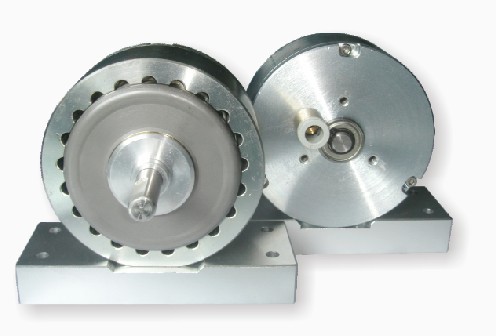 So, what exactly *is* a Servo Press? At its core, it’s about replacing the fixed, rotational motion derived from a flywheel or hydraulic pump with a direct-drive servo motor system. Think of a high-performance electric motor, governed by incredibly sophisticated software and sensors, directly controlling the ram movement. This isn't just \“on\” or \“off,\” \“up\” or \“down\” at fixed speeds. This is complete, programmable dominion over the ram’s position, velocity, force, and dwell time at *every single point* in its stroke. That’s the game-changer: infinite programmability.
 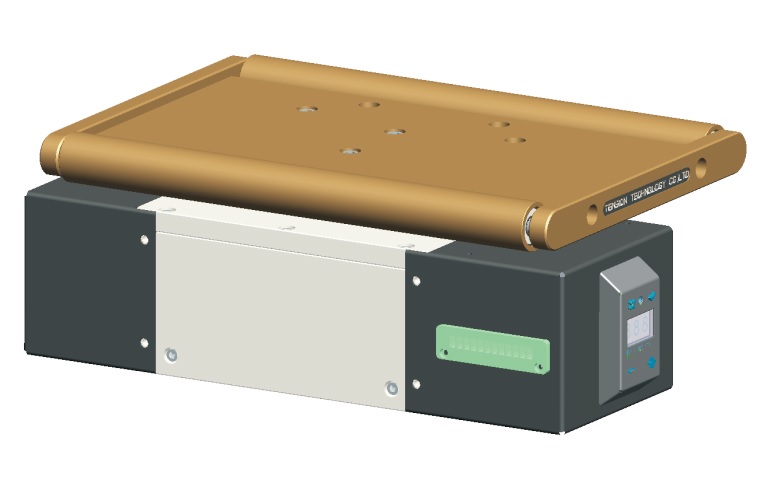 Let's peel back the layers and understand why this matters so profoundly: 1. **Unparalleled Precision \u0026 Repeatability:** Forget slop, vibration, or inconsistency inherent in traditional systems driven by linkages, clutches, or hydraulic valves. The servo motor's closed-loop control, constantly monitored and adjusted by encoders, ensures the ram moves *exactly* where it’s told, *exactly* when it’s told, with *exactly* the force required. Micron-level accuracy isn't just a dream; it's the standard operating procedure. Imagine forming intricate electronic connectors, delicate medical components, or aerospace brackets where the tiniest deviation spells failure. With servo, this precision becomes routine, slashing scrap rates dramatically and enabling parts previously deemed impossible to stamp reliably. Consistency isn't just improved; it's guaranteed. Batch after batch, day after day. 2. **Unmatched Flexibility \u0026 Process Innovation:** This is where servo presses truly shine and leave older technologies in the dust. Need to form a complex shape requiring multiple hits, varying speeds, or specific dwell times? Reprogram the press profile on the fly. No mechanical changes. No waiting for the flywheel to spin down and up again. https://telegra.ph/SILENT-STRENGTH-The-Servo-Pressing-Revolution-Transforming-Factories-Floor-by-Floor-12-28 can execute intricate motion profiles that mimic traditional presses or create entirely novel forming strategies. * **Non-Sinusoidal Motion:** Why limit yourself to the rigid up-down motion dictated by a rotating crank? Servo allows you to slow down the ram during the critical forming stage for optimal material flow and reduced springback. Speed up during non-contact travel. Create \“dwells\” within the stroke to allow for in-die operations like piercing, tapping, or even welding. Imagine coining operations with extended pressure holds for superior surface finish and dimensional stability, all within a single stroke. * **Multi-Step Forming in One Hit:** Complex parts requiring several forming stages can often be consolidated into fewer hits, sometimes just one, because the ram can perform multiple actions within its stroke. This reduces the number of dies needed, minimizes handling, and dramatically increases throughput. * **Die Protection \u0026 Process Monitoring:** The system monitors the force applied throughout the stroke in real-time. Deviations from the programmed force profile signal potential problems – an out-of-place blank, a broken punch, material thickness variation – allowing the press to stop *before* catastrophic die damage occurs. This isn't just preventing downtime; it's protecting your most valuable tooling investments. Real-time data logging provides invaluable insights for process optimization and quality assurance. 3. **Dramatic Energy Savings \u0026 Eco-Credibility:** Traditional mechanical presses store immense energy in a spinning flywheel, energy that is constantly consumed just to keep it spinning, even when the press is idle. Hydraulic presses require large pumps running continuously, generating heat and consuming significant power. Servo presses are fundamentally different. The servo motor only uses energy when it needs to move the ram. During dwell times or while idle? Power consumption drops to near zero. Regenerative drives can even capture energy during the ram's deceleration and return it to the grid. We're talking energy savings often exceeding 30%, sometimes reaching 60% or more compared to equivalent traditional presses. This isn't just good for the bottom line; it's a tangible step towards more sustainable manufacturing, lowering your carbon footprint and potentially qualifying for green incentives. 🌱 4. **Reduced Noise \u0026 Vibration = A Better Workplace:** The absence of the crashing flywheel engagement clutch, the constant whine of hydraulic pumps, and the jarring impact thud significantly reduces the overall noise level of a servo press. Vibration transmitted to the floor and surrounding equipment is also markedly lower. This creates a vastly improved, safer, and more pleasant working environment for operators, reducing fatigue and hearing risks. Lower noise levels can also simplify facility planning and reduce the need for extensive soundproofing. Quieter is objectively better. 5. **Faster Setup \u0026 Changeover (SMED Nirvana):** Minutes matter. Changing dies on a traditional press often involves adjusting shut heights, stroke lengths, and balancer settings – time-consuming, manual processes prone to error. Servo presses store die parameters (optimal speed profiles, force curves, shut height) digitally within the control system. Change the die, recall the program, and the press automatically adjusts. What used to take an hour or more can often be accomplished in minutes. This makes smaller batch sizes economically viable, supports Just-In-Time manufacturing, and drastically increases overall equipment effectiveness (OEE). The dream of Single Minute Exchange of Die (SMED) becomes an achievable reality. 6. **Extended Tool Life:** Precision control translates directly to kinder treatment of your dies. The ability to precisely control the forming speed minimizes shock loading. Programmable cushioned approach and release actions protect delicate punches and features. Optimized material flow reduces excessive friction and wear. The result? servo press machine between sharpening, reduced tool breakage, and significantly lower long-term tooling costs. Protecting your dies protects your profitability. Beyond the Core: The Intelligence Layer
 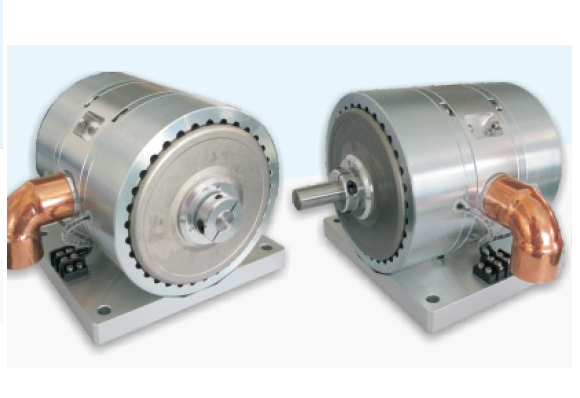 Modern servo presses aren't islands. They are integrated hubs of data. Advanced CNC controls like Siemens, Bosch Rexroth, or Beckhoff, coupled with Industry 4.0 protocols (OPC UA, MQTT), transform the press into a data-generating node on the factory network. Real-time monitoring of energy consumption, cycle times, force profiles, and error logs provides unprecedented visibility. Predictive maintenance becomes possible – analyzing motor currents, vibration signatures, and temperature trends to schedule maintenance *before* failure occurs, maximizing uptime. Production data feeds directly into MES (Manufacturing Execution Systems) for real-time tracking and analysis. This isn't just a press; it's a smart factory cornerstone. Dispelling Myths \u0026 Addressing Concerns: * **Cost:** Yes, the initial capital investment for a servo press is typically higher than a comparable traditional press. However, the Total Cost of Ownership (TCO) tells a different story. Factor in massive energy savings, drastically reduced scrap, longer tool life, less downtime, higher throughput on complex parts, and reduced changeover times. The ROI is often compelling and surprisingly fast – frequently within 2-3 years, sometimes less. It's an investment that pays dividends daily. * **Speed:** Early servo presses were sometimes slower in purely theoretical strokes-per-minute for simple, deep drawing operations vs. a high-speed mechanical press. This gap has narrowed significantly with advancements in motor and drive technology. More importantly, for complex parts requiring multiple operations or intricate profiles, the servo press often achieves *faster overall cycle times* by performing more work per stroke or reducing non-productive time. Its flexibility often outweighs raw speed. * **Complexity:** Modern servo press controls are incredibly sophisticated, but they are also designed with the operator in mind. Intuitive HMI (Human Machine Interface) screens with graphical motion programming make setup and operation accessible. Comprehensive training is key, but the learning curve is manageable, and the long-term benefits far outweigh the initial familiarization period. Real World Impact: Stories from the Floor * **Auto Tier 1 Supplier:** Struggling with high scrap rates (over 8%) on a complex door reinforcement bracket using a mechanical press. Springback variations were unpredictable. Switching to a servo press allowed programming a multi-stage forming profile with a controlled bottom dwell and slower forming speed. Scrap plummeted to less than 1.5%, saving tens of thousands monthly. Energy usage dropped by 45%. * **Electronics Component Manufacturer:** Needed to produce ultra-precise, miniature shielding cans with very fine features. Traditional presses couldn't achieve the necessary precision without excessive tool wear and constant adjustment. A small-tonnage servo press provided the micron-level control, enabling perfect forming and coining, reducing setup time per job by 75%, and eliminating almost all positional scrap. * **Appliance Maker:** Facing bottlenecks in producing complex washer tubs requiring multiple secondary operations after initial forming. Implementing a large servo press enabled integrating piercing, flanging, and even in-die tapping within the forming stroke, collapsing three operations into one. Throughput increased by 40%, floor space was freed up, and labor costs reduced. Choosing servopress are created equal. Key considerations: * **Tonnage \u0026 Bed Size:** Match to your part spectrum. * **Drive Configuration:** Direct Drive vs. Belt-Driven Servo – Direct drive offers ultimate precision and responsiveness; belt-driven can be a cost-effective entry point for certain applications. * **Control System:** Power, flexibility, user-friendliness, and connectivity (Industry 4.0 readiness). * **Stiffness \u0026 Construction:** Rigidity is paramount for precision and longevity. Look for robust frames and guided systems. * **Service \u0026 Support:** Proximity of technical expertise, spare parts availability, training programs. Your partner is as crucial as the machine. * **Application Engineering:** Does the manufacturer understand *your* specific challenges and can they demonstrate how their servo technology solves them? The Future is Programmable The trajectory is clear. Servo press technology is rapidly moving from being a premium option to becoming the standard for modern, competitive manufacturing. As motor power density improves, control systems become even more intelligent, and integration with factory-wide data systems deepens, the capabilities will only expand. Imagine presses that dynamically adjust forming parameters based on real-time material property feedback, or systems that autonomously optimize their own performance for maximum efficiency overnight. James, our plant manager? He took the leap. The thunderous clang of the old press is gone, replaced by an almost eerie, purposeful hum. Scrap bins are remarkably empty. Energy bills are down. The complex automotive part? Nailed it on the first trial run. His operators smile more. The boardroom scowls have turned into nods of approval. The unexpected benefit? Innovation. His engineering team is now experimenting with forming techniques previously considered impossible, designing new parts that give their products a competitive edge. The servo press didn't just solve his problems; it opened doors he didn't even know existed.
 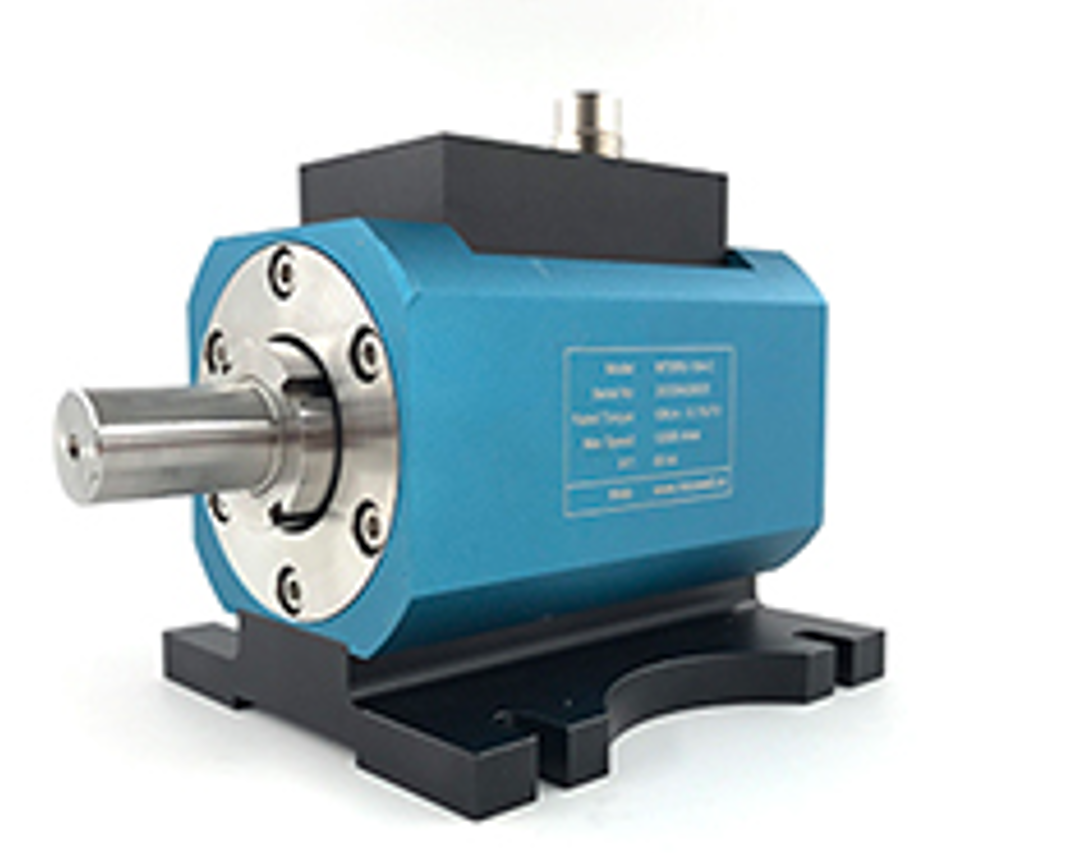 Profit isn't manufactured by brute force anymore. It's engineered with precision, flexibility, and intelligence. It's engineered with servo. The revolution on the shop floor isn't loud. It’s precise. It’s efficient. It’s already here. Is your manufacturing ready to feel the difference? 🤝 Let's unlock your potential.